|

Do you know your tolerance for risk? Are you comfortable with
the highs and lows of stocks? Could you sleep at night if
your investments performed poorly? How you invest should reflect
how you feel about risk, investment goals, as well as how
much time you have until you will need the money.
Asset Allocation: Finding the Perfect Balance For You
Asset allocation can sound like complicated and intimidating
words. Technically, the term means figuring out the right
mix of investments, and balancing growth against risk. In
layman's terms, asset allocation means you need to put your
eggs in different baskets.
Determine the Asset Allocation For Your Retirement Plan
When you set up your retirement plan, you are usually asked
to determine the type of investments you want. Questions include:
- How much money should I put into growth vehicles like
stocks and mutual funds?
- How much money should I put in lower risk securities
such as bonds or bond funds that have lower returns?
For a more detailed discussion of these investment vehicles,
read MsMoney.com's Investing
section or get specific information on Stocks,
Bonds,
and Mutual
Funds.
MsMoney.com's Quick Rule of Thumb For Asset Allocation
- Take your age and subtract it from 110.
- The answer is the percentage of your assets you should
put in stocks and stock-based mutual funds.
- The rest of your assets should go into something less
volatile such as bonds and fixed rate securities.
|
Rule of Thumb: Asset allocation for Retirement Accounts
|
|
Your Age
|
110 - Your Age
|
% of assets in growth investments
|
% of assets in fixed investments
|
|
20
|
90
|
90%
|
10%
|
|
25
|
85
|
85%
|
15%
|
|
30
|
80
|
80%
|
20%
|
|
35
|
75
|
75%
|
25%
|
|
40
|
70
|
70%
|
30%
|
|
45
|
65
|
65%
|
35%
|
|
50
|
60
|
60%
|
40%
|
|
55
|
55
|
55%
|
45%
|
|
60
|
50
|
50%
|
50%
|
|
65
|
45
|
45%
|
55%
|
As you can see from the table above, the older you become,
the smaller your stock investment will be. This makes sense
because the closer you approach retirement, the less risk
you want to incur.
For more information, go to MsMoney.com's discussion of the
Risk/Return
Trade-off, Asset
Allocation, and Asset
Rebalancing.
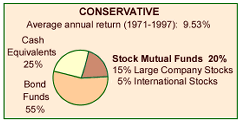
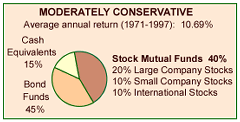
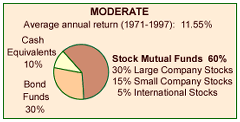
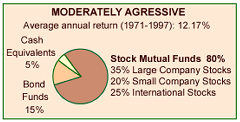
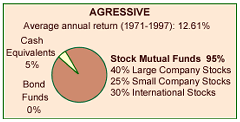
Below are 5 pie charts to give you an idea of examples of
different asset allocation strategies based on your risk tolerance:
Creating
Your Model Portfolio that Matches Your Goals
|